
Emergency Preparedness Guide
An infection outbreak is a stressful time that often requires an emergency preparedness and response guide.   During a pandemic, people Read more
The pandemic COVID-19 not only killed millions of people around the globe but also impacted our economy which led to recession. Read more
The terms shelter in place, shelter at home, or stay at home, are used by the government as part of Read more
A tsunami is a series of seismic and large ocean waves resulting from an enormous displacement of the seafloor. It Read more

As Dennis E. Gale, author of ‘Understanding Urban Unrest’ points out, mob violence mainly by the oppressed is triggered primarily Read more
There are an estimated 100,000 wildfires that affect around 4.5 million homes in the United States each year. That’s a Read more


An infection outbreak is a stressful time that often requires an emergency preparedness and response guide 

During a pandemic, people are forced to self-isolate to curb the spread of the disease and prevent new infections.

It is a critical aspect of mitigating the disease, and as such, everyone should do their part in containing the infection.

Self-isolation has two objectives.

Knowing how to behave and act when one is alone or when they are amongst other people is essential.  

Therefore, you need to have a preparation checklist to develop the right attitude and reflexes when self-isolating.  


Here is an emergency preparedness guide that should be second-nature during self-isolation:


No or limited contact. 

preparation checklist

Whatever you do, it should be on the top of your mind to avoid contact or physical meetings with other people, infected or not. Avoid having visitors in your house. Do not visit other people.  

Should you really need to go out, be sure to plan ahead. Make sure you take precautions to protect yourself and to protect other people.  

Self-monitoring is key. 

Monitor yourself regularly for any signs and symptoms of the disease. These signs can be early symptoms of the disease or symptoms of the infection worsening. Use a reliable source to educate yourself on the signs and symptoms to consider. 

It is vital to protect yourself from infectious diseases so as to remain healthy.  

Hygiene, and sanitation. 

Practice personal hygiene using hand sanitizerantibacterial soap, and alcohol when you are in self-isolation. Make sure to disinfect and do surface sanitation as well. Make it a point to disinfect all surfaces and points of frequent contact after each use, especially if you are living with other people. 

Think of vulnerable individuals. 

At high-risk groups include:  

Think of these people and avoid contact with them at all cause during your self-isolation, whether diagnosed with the infection or not. 

Seek help when needed. 

emergency response plan

Make your first aid kit and thermometer come in handy. Nonetheless, do not hesitate to ask your healthcare provider for a guide if you have any problem or you are not sure about something.  

Self-isolation does not mean you should figure things out on your own. If you develop a symptom before you decide to self-medicate, ask someone else with authority and knowledge for advice and confirmation. 

Have an emergency response plan should you start feeling not normal. 

Stay informed. 

Make it a habit to always stay informed.

Follow news updates on the outbreak and go beyond by reading scientific articles related to the outbreak. The more you know about the disease, the better you will be equipped to help fight it.  

One thing though, always ensure that your sources are reliable as lousy information is worse than no information. 

Get fit.

When self-isolating, it is always tempting to laze yourself on the couch in front of the TV. While this may be fine for the first days, remember that self-isolation could last for a few weeks.  

So, keeping fit physically will not only help your body but also your state of mind.

Have an improvised gym at home.

Do some stretching exercises or some light exercise. There are ample fitness programs available online with varying degrees of difficulty that you can have as a guide.   


While it is essential to know the dos and don’ts of self-isolation, you should be too hard on yourself.  

Remember to stay cool. Do not worry too much. If you’ve done all the emergency preparedness response needed, then you and your loved ones would be just fine.  

Always keep a positive outlook especially during self-isolation so you won’t end up feeling depressed or lost. 

The pandemic COVID-19 not only killed millions of people around the globe but also impacted our economy which led to recession.

Although human lives are more important than anything else, facing the pandemic’s aftermath is putting human lives at stake. 

As our economies fall, hundreds of thousands of people face layoffs which of course affect everything like children’s education, social activities, living arrangements, etc. 

All this is known as the “domino effect”. 

So, how are we going to face and survive a potential recession if you’re one of those who lost your job? Do you have an emergency fund?

Below are some of the jobs and careers you may want to consider as a substitute for your job or as an additional source of income in the event of a global recession:  

In these trying times, many people need more health services than usual. Having an adequate number of health workers is needed to cope with the current COVID-19 pandemic situation as well as the existing health conditions that arise due to stress induced by the recession. 

People still want the best education for their children even in poor economic decline. Online tutorial services and learning centers are in demand. 

With the ever-increasing internet accessibility, business opportunities for webpreneurs are increasing. There’s no limit to how much they can earn because the demand for more clicks, more leads, and more revenue is endless. 

internet marketing

Here are some sites and blog posts about getting acquainted with web traffic optimization and money-making opportunities.

Another viable job that has resulted from the usage of the internet is the virtual assistant. If your forte is administrative and organizational activities this job is for you. 

Given the COVID-19 pandemic situation where physical distancing and staying at home are a must, online selling of products and foods is thriving. Many people prefer not to shop. It’s very easy since it is very convenient and it can be delivered right through your doorstep. 

You’d be wrong to believe that business owners and high-income earners do not need the help of an accountant during the recession when managing their returns, but in fact, it’s the opposite. When they are suffering a decline in the business, they need an expert to carefully manage the in and out movement in their funds. 

In terms of taking a risk in investing, expert opinions are being consulted. The money invested during a recession has a possibility of doubling up when the economy recovers or the other way around – becomes zero. Either way, it’s gambling. So before taking a risk, consult an expert. 

Cremation services, making caskets and coffins, and designing epitaphic tombstones are also in need during these trying times when death is inevitable.

The COVID-19 pandemic situation shifted the economy in ways we don’t fully understand yet. In uncertain times such as this, being knowledgeable, flexible, and vigilant is very important. 

Now is the perfect moment to switch careers, boost your income, and even protect your job and appreciate it more. 

Given the current situation, it pays to know more about what other jobs, industries, and skills are currently in demand. With this, you’ll be able to easily plan and adapt your next move to prepare your family’s future especially now that the world is facing a global economic decline and a recession. 

The terms shelter in place, shelter at home, or stay at home, are used by the government as part of community emergency preparedness.

That is to tell its citizen to stay safely at home, in the building, or car that they are already in.

Evacuating or running to a ‘safer’ place should not be done during this time. This is because of the presence of an immediate danger outside. An example of this threat is an active shooter, a wild animal on the loose, a bomb, or a pandemic.  

This, however, is usually the last resort of the government. Because imposing a stay-home will directly affect the economy.  

And this is something we must be seriously prepared for.  

So, when the need arises, we must have an emergency response preparation for the possibility of the next disaster. 


What to have in case of emergency of yet another shelter in place event? 

Since we’ve experienced the shelter at home already, which no one thinks we would experience in our lifetime, do you thinking we should be doing differently this time? 

Have an emergency supplies list. Stock up still with Drinking water, Energy barsCanned goodsDry foods like pasta and rice as priority. Add in as well your emergency drugs preparation such as TylenolVitamin CVitamin D, ZincCough medicine, Cold and flu medicine to stay healthy. Have ample stock of Face maskToilet paperIsopropyl Alcohol, Hand SanitizerDisinfectant cleaners, and Thermometers at home. 

Also, having a first aid kit, an emergency go-bag list and a survival kit will definitely go a long way. These are packed items that you can still use for other situations such as a self-quarantine or other national emergencies. So, don’t worry. Just be sure to check the expiration date especially of the medicines. 


When should you start getting the supplies above? 

As soon as possible.  Whether that is through online ordering or in-person shopping.  

Let us not make the same mistake of waiting to stock up the items above when everybody is also looking for these. 

Of course, we should avoid hoarding such items, so just make sure that you’ll have enough supplies for you and your family for 2 to 3 months. 

Once you see that the items above re-emerge in the supermarkets or online, start buying them. If you have a tight budget, just buy only the items you think are most important for you and your family. 


Are you mentally prepared for what is to come? 

Stay positive. Easier said than done. But since this is the situation is the new normal, we don’t have a choice, do we? 

Check our blog about mental health, which may help you to stay positive amidst the negativity we have right now. Keeping an active life even at home is possible. Consider having a cheap but functional home gym 

One of our survival blogs you should read which is beneficial especially if you have a family is “How to Keep it Sane with your Family when in a Lockdown“. We know how insane it can be in quarantine even though it’s in your own house with your family. It can bring anyone into a mental breakdown, even kids! So, we’ve prepared some activities you could do with them while staying at home. 


Do you have the financial means to survive staying at home? 

Not only should your body and mind be prepared for it. You must also take into great consideration how to prepare for a disaster on a budget 

Staying at home may mean a reduction in earnings. So, we have a very informative articlewhich can help you find other ways to survive. 

Because the reality is payables will still be there even during this type of unfortunate event. Learn ways on how you can pay your bills even during trying time 

Be sure to avail of online shopping deals when buying basic necessities. You may want to check out deals from RakutenHoney, and Instacart. 


Make sure you’ve got all you need to ensure a safe, secure, and enjoyable shelter at home whether alone or with your family.  

As long as you and/or your family are safe and healthy then there’s no reason why surviving the next shelter in place would be much of an ordeal.  

Remember, preparation is the key. 

Good luck and keep safe!  

P.S. 

Do you know that high doses of Vitamin C help the body fight viral infections?  

The daily dosage of Vitamin C is a minimum of 2000 mg, but studies have shown that to prevent illness, an adult should be taking 1000 mg every HOUR.  And if you have an active infection, that dose increases to 1000 mg every 30 MINUTES!   

That is a LOT. 

With Immune System Booster, you can give your body light infusions with the energetic equivalent of 20,000 mg of Vitamin C WITHOUT the inconvenience of frequent doses throughout the day, and the embarrassment and pain of loose stools. 

For less than the price of a cup of coffee, you can provide your entire family with the benefits of a strong immune system every day of the month.

For a limited time, you can trial the Immune System Boost for 7 days for just $1.  After the 7 days, you will be charged the remainder of the $19.99.  You can cancel your subscription at any time.

Start Strengthening Your Immune System Now!

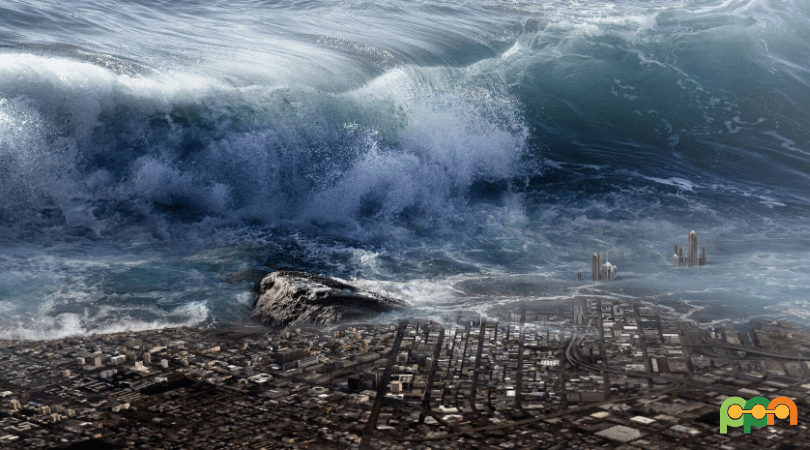
A tsunami is a series of seismic and large ocean waves resulting from an enormous displacement of the seafloor.

It is caused by underwater disturbances such as underwater landslides, volcanic eruptions, and earthquakes at tectonic boundaries under the sea. Nonetheless, tsunamis cannot be taken for granted.

The size of a tsunami can vary from a meter high to more than 300 meters high in size! 

Tsunamis are dangerous and can destroy properties, infrastructures, buildings, and worst – kill lives.

Drowning is the most common cause of death associated with it which can happen anytime, anywhere along coasts. 

Here are some tips on how you can handle, and survive a tsunami attack. 

 Preparation Before a Tsunami Attack: 

  1. Learn the risk of tsunami in your location especially if you are living near a coastal area.
  2. If you are a tourist, acquaint yourself with the local safety evacuation protocols of the place. Know the safe evacuation routes and zones in your community.
  3. Identify the risk or potential dangers of flooding in your house or the place you are currently residing in. 

4. Secure an emergency preparedness kit and a bag with basic supplies.


      5. Create a family escape plan and a place where you can meet in case of separation. 

Surviving During a Tsunami Attack: 

  1. An early warning sign of a tsunami is an occurrence of an earthquake. Protect yourself first during an earthquake. Follow the Drop, Cover, and Hold safety protocol. 
  2. Another indication of a tsunami attack is a recession of water levels below an unexpected low tide. Stay out of the water and get to higher ground immediately as far as possible.
  3. If you are caught in the water, grab something that floats to save you from drowning.

    4. KEEP CALM and DON’T PANIC to avoid chaos.

Be Safe After a Tsunami Attack: 

  1. Inform your loved ones you’re safe and where you are. 
  2. Listen and check for the local news and updates to stay informed of the situation.
  3. Follow the authorities.
  4. Return only when authorities tell you it is safe. 

Since earthquakes cannot be predicted, once it has occurred, a tsunami can possibly be anticipated. 

During a natural disaster and emergency situational awareness, sufficient preparation, and knowledge in preventive measures is needed.

These will keep us better protected from future disasters such as tsunami. 

Remember:
We cannot stop natural disasters but we can arm ourselves with knowledge.

Be vigilant.

As Dennis E. Gale, author of ‘Understanding Urban Unrest’ points out, mob violence mainly by the oppressed is triggered primarily by interracial events.  

Civil or urban unrest, also known as civil disorder or strife, is typically defined by law enforcement as a gathering of three or more people in reaction to an event with the intention of causing a public disturbance in violation of the law.

Examples include protests, different obstructions, riots, and sabotage.  

It is indeed the right of each individual to lift their voice and be heard especially when there’s a rise in inequality, rampant corruption, and slow growth in the economy to mention a few.  

Anti-government protests create not only chaos in the streets.

In a wider sense, urban unrest can paralyze the nation’s economic growth. 

Whether new or old protests from around the globe, urban or civil unrest is indeed a serious matter.

If your household contains children or an older individual, you must know how to stay safe and protect you and your loved ones. 

Panicking is not an option, as it can create more chaos. 


Below are ways on how to remain safe during civil unrest. 

When you are in a place where a protest is occurring, here is what you can do: 


When at home, you must: 

The past and present events of civil unrest echo injustice but we must also remember the extent of damage they caused such as loss of innocent lives and destruction of private properties.

A violent act cannot be stopped by violence as well.

Of course, we shouldn’t allow unrest and inequality to continue, but it should be expressed in a peaceful manner. 


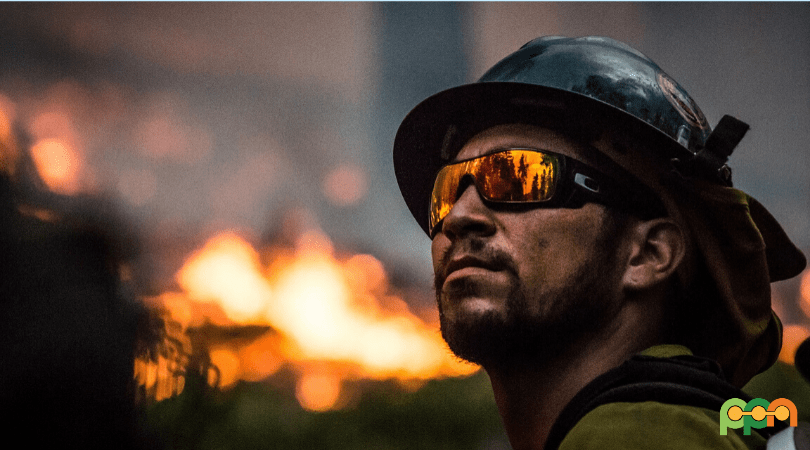
There are an estimated 100,000 wildfires that affect around 4.5 million homes in the United States each year.

That’s a huge amount of property lost not to mention the possible lives taken. 

Known as a common natural disaster in the US, wildfires are not new to the areas of California, Texas, Colorado, and Arizona. And the sad reality is, 90 percent of the wildfires are caused by humans according to the U.S. Department of Interior.  

So, the good thing about it is it can be controlled or better yet, prevented. With proper knowledge and practices, Americans will drastically reduce the occurrence of this event.  

Below are ways on how we can shield ourselves from being affected by wildfires.  

Create a Defensible Vegetation Space 

People living in rural areas must be mindful of setting up the landscape of their vegetation area. Consider adding flower beds, rocks, and mulches in between plants.

This helps retain soil moisture, thus, preventing fires from crawling from one plant to another and then to your home. Having a patio, pathway, sideway, driveway, fence, or walls made of brick and stone also helps slow down the spread of fire.  

Eliminate Ladder Fuels 

Be mindful of small plants that can make a fire climb up trees and then these taller ones allow the fire to make quick access to your home. So be sure to eliminate ladder fuel type of plants.

You may also cut off the lower branch of trees and remove plants around it.  

Clean Your Yard 

Keep your yard clean and green. Remove debris and dead vegetation that can fuel a wildfire. Water plants regularly and keep your yard moist. Be sure to remove fallen, dried or dead leaves and trees, as well as eliminate debris from your gutter and roof.  

 You may want to consider having a fire-resistant roof. 

Have an Emergency Water Supply 


Consider having your own water storage. Whether a water tank or small pond, firefighters can use these just in case a fire breaks out by your home. It is also a good idea to have a sprinkler system inside and outside your house. This will prevent fire especially if you are not at home.  

Emergency Plan 

Of course, no matter how careful we are, there are still unexpected things that can happen and cause a wildfire near you.  

Have a go bag.


It’s a good idea to have a family escape plan, and a fire department emergency number at hand. One cannot be too ready, but that does not mean that we should be lax about it. 

Preparation is essential for the safety of you and your family.

The truth is, we cannot rely solely on the government when it comes to fighting wildfires. It’s been our problem for years.   

When we can do something about it, let’s not procrastinate about doing it and sharing the information with others.  

Though it may sound cliché, it still holds true that prevention is always better than cure.  


Page Created with OptimizePress