No matter how we prepared ourselves and our homes for a disaster, let’s face it, we can’t be spared completely.
We always look for things we should have to have in case something bad happens to us. However, how will we know these things if we have no idea of what we might not have in the first place?
For that, we made a list of some of the things that we could lose in case of a disaster. If you have paper and pen with you, you might want to write these down.
Potable water doesn’t fall from a tree, right?
Now, ask yourself where you get your water at home? Was it sourced from your own well, from a paid water supply network, or from anywhere else?

Okay. If you answered those questions, the following are the most important follow-up questions you need to reflect upon.
If your answer is the latter, then you are in trouble.
Water is our most needed resource because, without it, one can’t last for so long. Our bodies evolved to last for weeks without food, but water is a different story.
Overhead or underground power lines may be cut off once struck by a severe disaster. Once these electricity-carrying power sources stop giving your house some juice to run your appliances, what will you do? How will you get your meals cooked or your meats frozen? Will you be able to last a few nights without light?

This may only be one necessity you could lose but it surely affects a lot of your daily activities. Forget about watching TV, playing games, or drying your hair, but how about getting food on your table? You would not want to eat rotten meat, right?
How about your business? How will you run it without electricity?
Our species has been living for millions of years without electricity. But due to the evolution of the demands we need to meet to survive, we can’t deny that losing a stable supply of this form of energy is a disadvantage.
Your house is your most important investment, not just financially but holistically.
It is where you raise your kids, where your family can relax after a day’s work, and where you spend most of your life in.

Even if you built your house sturdy enough to escape the crushing grip of disasters, there are other ways it can be taken away from you.
Some examples of these indirect but existing reasons are when your house is under a mortgage or you owe some people or firms a big amount of debt and a disaster happens.
How does this relate to what we were talking about? Well, remember that when there is a disaster, people or companies you owe with will possibly hunt you down. They might become very persistent in making you pay your debt, or they might increase the interest.
A worst-case scenario is when your assets, which includes your home, might be taken away from you. This might happen when you have nothing else to pay them because your business might have not recovered from the post-disaster effects yet.

Preparing to survive not just through the day of the disaster but also through the days thereafter is a task that will take a lot of planning and effort.
However, if your schedule does not allow you to spend so much time getting the things you might need, try having a deluxe emergency kit enough for four persons to use for 72 hours that’s already available online.
With a click of a hand or two, your family can be emergency ready. Don’t wait for the time when you can no longer actually have it because of the large demand by post-disaster victims. Start having them today to save yourself the worry.
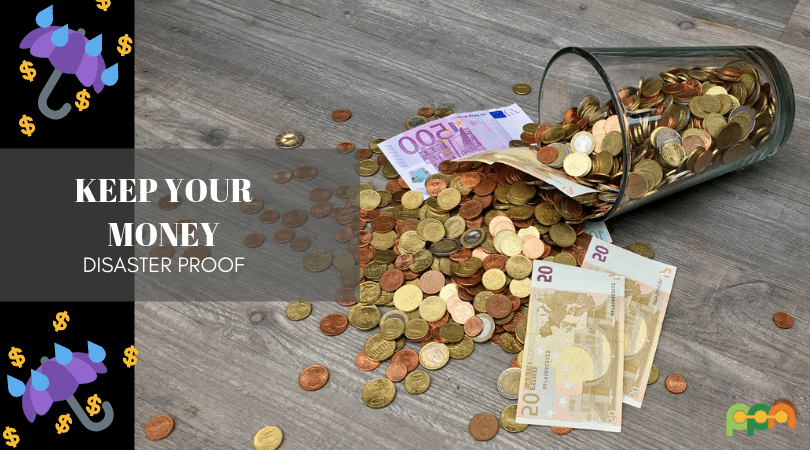
When recovering from a disaster, we would need an ample amount of money for basic needs, repair, and more.
And in the absence of Automated Teller Machines (ATMs) or banks, having cash on hand is a valuable resource that we need.
However, this post-disaster scarce resource is flammable and water-absorbent. Thus, keeping them safe in case of fire and flood is a dilemma.
It may seem out of the box but trust us, it isn’t. Lunch boxes are usually insulated, leakproof, and heavy-duty so they are perfect for this case.
What’s more is that in case of a bugging out, no one will ever suspect that what you’re carrying inside it is money.

We recommend that you have a portable lunch, or money, organizer that’s 100% waterproof, roomy, heavy-duty, leakproof, and dirt-resistant. It comes in black so it’s perfect for a universal style.
If you’re a fan of watersports, you might shoot two birds with one stone if you’ll have a lightweight, leakproof, breakproof, and waterproof portable bag to put your money and other valuables in.

These kayak (or any other water sport) accessories are good alternatives for housing not just your money but also some of your important documents.
Watersport kits are great, however, if it’s not your cup of tea we have an alternative. For those who like to get the same waterproofing benefits but would also like to save more, you can have a set of three differently-sized waterproof utility pouches.

Each pouch is made of strong vinyl watertight materials that can keep your money in perfect condition. It also has a long strap attached so there’s no excuse for losing it in any case.
To keep your waterproof materials safe from an accidental fire incident, try putting them in a large fireproof bag. These bags come with a handle to grip and a detachable strap so you’ll have the convenience of choosing your preference for carrying it.

This alone is also water-resistant so larger documents can also be included. Added to that, you can also make it your everyday work bag.
For money and other small flammable items, you can also have a three-layered water-resistant fireproof bag that comes with velcro closure.
You can store your cash, photos, passport, and identification cards in each layer without worrying about getting burned. Most of these bags have no strap attached though so just keep that in mind.

Know your options ahead. It is an important determining factor in your disaster preparedness planning. This also holds true for your practical preparation partners.
In conclusion, disasters come and go like the wind. And since we can’t stop them from ever happening at all, it’s a must that we prepare and so should you.
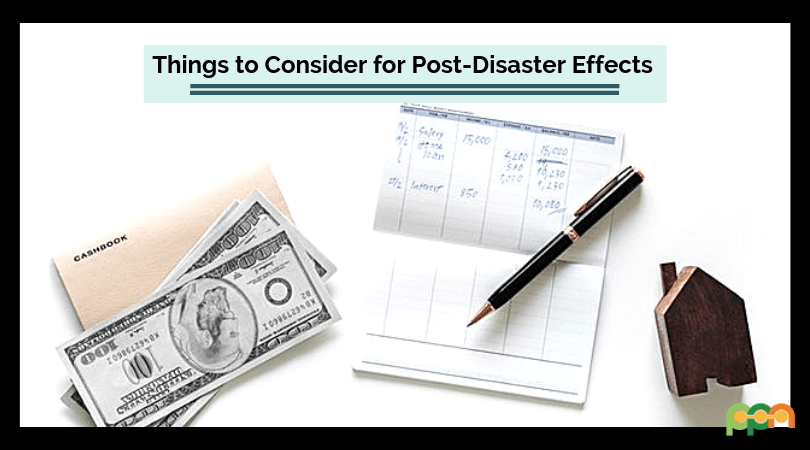
It is not only during a disaster that we should be financially prepared. Post-disaster effects are also things that we need to consider.
In planning for the safety and sustainability of the whole family after an emergency, the following are important tips to note.
In normal days, cash isn’t an ideal form of money to keep. Aside from it being prone to getting misplaced, robbed, or washed away, it can also bug our minds into spending more than we can afford. However, if we want to recover from unexpected emergencies or disasters, we need to invest in keeping a substantial amount.
Why? Well, online banking, money outlets, or ATM machines might not be functional after a storm, flood, earthquake, or fire, but our tummies aren’t. We constantly need to feed, bathe, and work, thus we constantly have to be financially stable.
If you can’t use your cards, your best immediate option is cash. However, if you worry about how you can keep your cash safe, you can try putting them in a secured pouch for documents and money that has a handle to grab on.

It should also be lightweight so you can easily take it away during an emergency situation. You just need to grab them and go!
Coins are heavy but they have a lot of practical uses. Aside from trading them for goods, they can also be used to test tire threads, fix a wobble in pieces of furniture, tighten screws, take quick measurements, and more.
What’s good about keeping coins is that they accumulate over time. You won’t need to ruin your pocket to save financially. After your grocery shopping, you surely will have a lot of change, right?

If you consider having them in your pockets all the time a burden, rather than spending them to relieve you of this, try to store them for emergency purposes. However, to prevent your kids from accidentally ingesting them, keep them in a secure, durable, waterproof, fireproof, and lightweight bag or pouch.
It’s also a good money-saving habit you can teach your kids.
Aside from cash and coins, it is also a good investment to keep something of high value to pawn and sell. Invest in something that’s of value even in a disaster.
When you are running out of money, It’s best to have pieces of jewelry, watches, or other high-valued materials you can exchange for things you might need. Some forms of gold or silver, which are more lightweight than gadgets, are best for this option.
However, in keeping these things, you need something that’s secure, lightweight, and portable, in case you’ll need to leave your house to survive a disaster. You’ll need something you can wrap around and put inside your backpack.

Jewelry boxes and vaults can secure your pieces of jewelry in good shape, but they’re too bulky to carry. Try keeping them in a wrappable two-sided jewelry organizer that has several pockets to maximize space.
Whenever a disaster strikes, you can wrap this jewelry organizer and put them in a reusable, waterproof, heavy-duty, lightweight nylon storage tote bag. With this, you can bring all your valuables anytime, anywhere.
People don’t always need money to trade. We must also prepare for times when goods will be more important than cash. This usually happens when consumable goods are so scarce that a bit is worth more than gold.
If matters get worse and money will not be as valuable to others as it was before, it’s a good option to keep a few extra things we might need for survival. These things may range from consumable goods, batteries, water, seeds, first aid kits, vitamins, matches, tarps, camping gear, and more.
It’s always better to be ready than sorry so whether you’re in a disaster-prone area or not, it’s good to make saving possible necessities a habit. This may not only save you from drowning in problems later but will also make you more financially steady.
Disasters are as inevitable and as unpredictable as the wind. We can’t stop them. We don’t know when they are coming. We have no idea when they will be going. Since we can’t do anything to prevent them, we should be ready for them at the very least, right?
In this blog, we will not be talking about what valuable things to prepare. We will be talking about what we should be wearing instead.
Are You Ready for Bugging Out?
Usually, when some disaster happens, it’s our best choice to stay at home to be safe. But what if our house is no longer safe? Are we ready to leave it? If we leave it, do we have all the things we will need in our bug-out bag? If yes, that’s good. We’re now ready to move. But are we?
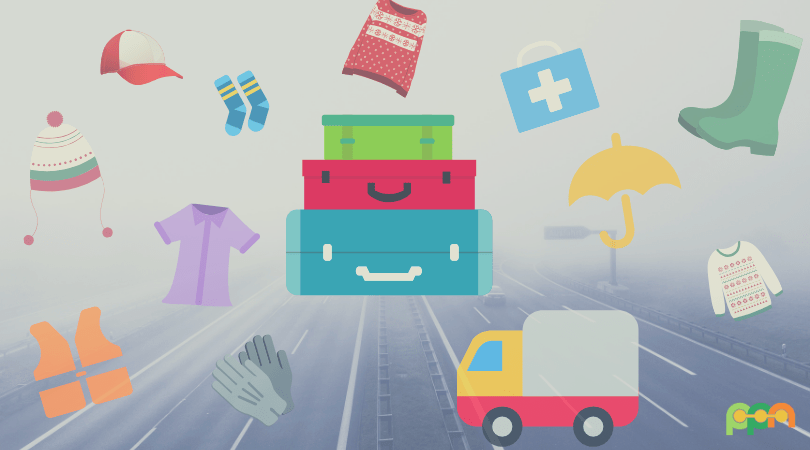
One of the most important things people often forget to consider is the things they need to wear when they bug out. However, as much as we need emergency kits and food supplies, we also need to have some good sets of clothes to bring. But how do we know which ones we want?
Of course, it should be in a safer place. But will it be a colder location or a warmer one? Whatever is the case, you should at least pack one or two sets of ideal clothing for each condition.
If you plan to go to a warm place, you could choose to have lesser warm clothes. If you plan to go to colder places, you could wear thicker fabric or wool-like fabric to keep yourself warm.
However, if you’re not sure, you can bring more warm clothes than cool ones because it is technically easier to dress down than otherwise. It will not only save you from dressing inadequately in the cold weather but will also make you carry a lesser needed number of clothes.
Don’t forget to bring some pairs of socks, gloves or mittens, and hats too!
If you’re going out alone, this is not a problem. But if you have kids with you, then this will be.
Why? Because kids copy what they see from their parents. If you want to teach your kids survival tips they need to learn, it’s best if you set an example for them. This way, long-term memory retention is most potent and impactful.
If they see you dress up in a certain way, they would automatically think it’s okay for them to do it because you do it, too. This would open up more chances for discussion for the whole family to bond and be closer to each other.
If the place you’ll be going to can be reached by your car, van or any other transport, then your ordinary set of casual shoes are okay to wear. However, if there will be some sort of intensive walking or hiking required, better equip yourself with some heavy-duty set of hiking boots/shoes.
Shoes may wear and tear first from all the weight they carry and all the surfaces they get rubbed into. So getting a good set of shoes is actually an investment.
Aside from it being heavy-duty, having a pair of insulated shoes is ideal for rainy days and the winter season.
Whatever the season is, it’s important to keep yourself dry so buy waterproof fabric or at least some clothes with water-resistant fabric to avoid staying wet for a long time.
People can get a cold, fever, or any other diseases just by staying wet for a long time, so to avoid this, keep yourself dry if possible.

Generally, a set of waterproof hooded jackets and trousers, gloves, and shoes/boots worn over some layers of clothes and socks will do the trick.
Clothes are not only made, sold, and worn for style and comfort but also for staying healthy and adapting to the environment. Before we choose any clothes we like to buy, we should consider how we will use them and when.
When you are planning the clothes you like to wear in a certain situation ahead of time, you’ll save wasting time thinking about it when a disaster’s already taking its action.
Don’t wait for it to come into your mind only when you need it and you don’t have it. Do the planning now!
Solar power plays a vital role in protecting the environment as it helps slow or stops global warming, which threatens human survival.
The good thing is that many decades of research and development have been made which led to effective solar panel systems that produce electricity without generating global warming pollution.
Solar power is clearly one of the most essential solutions to the crisis of global warming. This can also meet the growing energy demands of people throughout the world. Solar energy is a highly valuable source of electricity that can help diversify our nation’s energy portfolio.
There are a lot of noteworthy solar power advantages. Some of them include the following: